

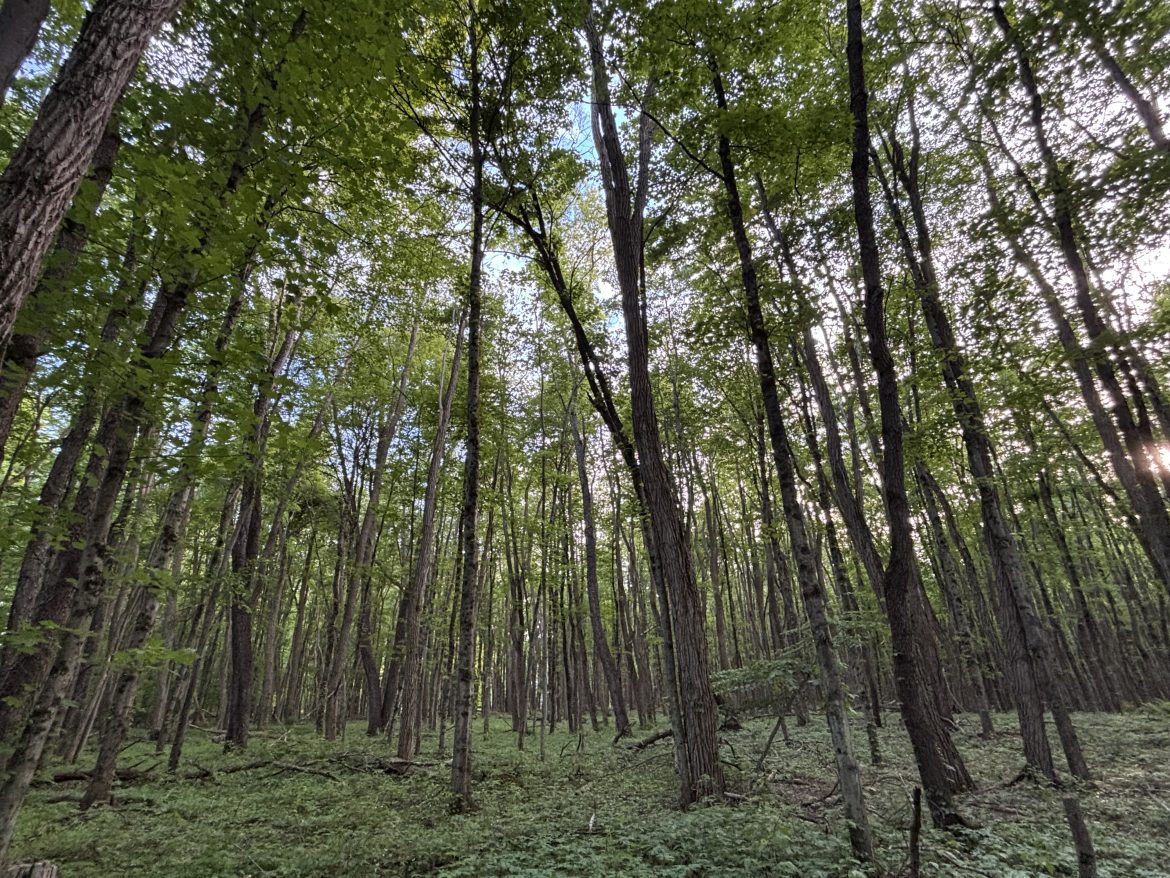
If you walked around the Pine Bush Preserve in May and June this year, you will have seen a good deal of charred, ground, trees and brush. It looks ominous and worrying, but you were really observing a very healthy and productive part of maintaining this ecological wonder – a carefully managed and scheduled controlled burn.
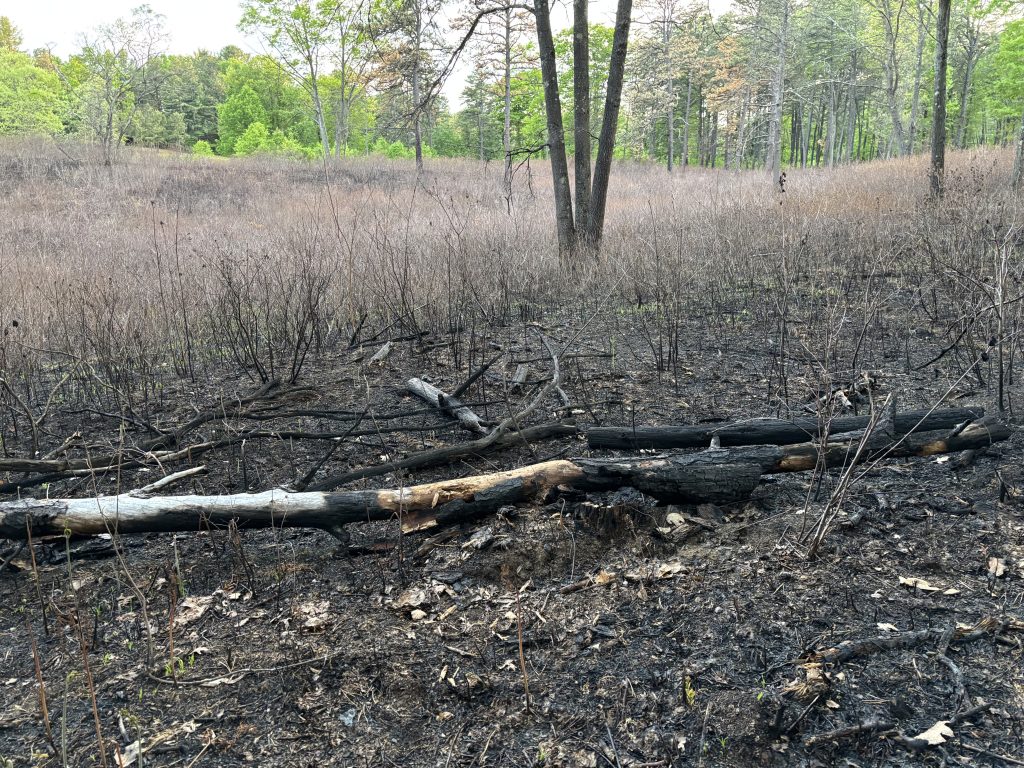
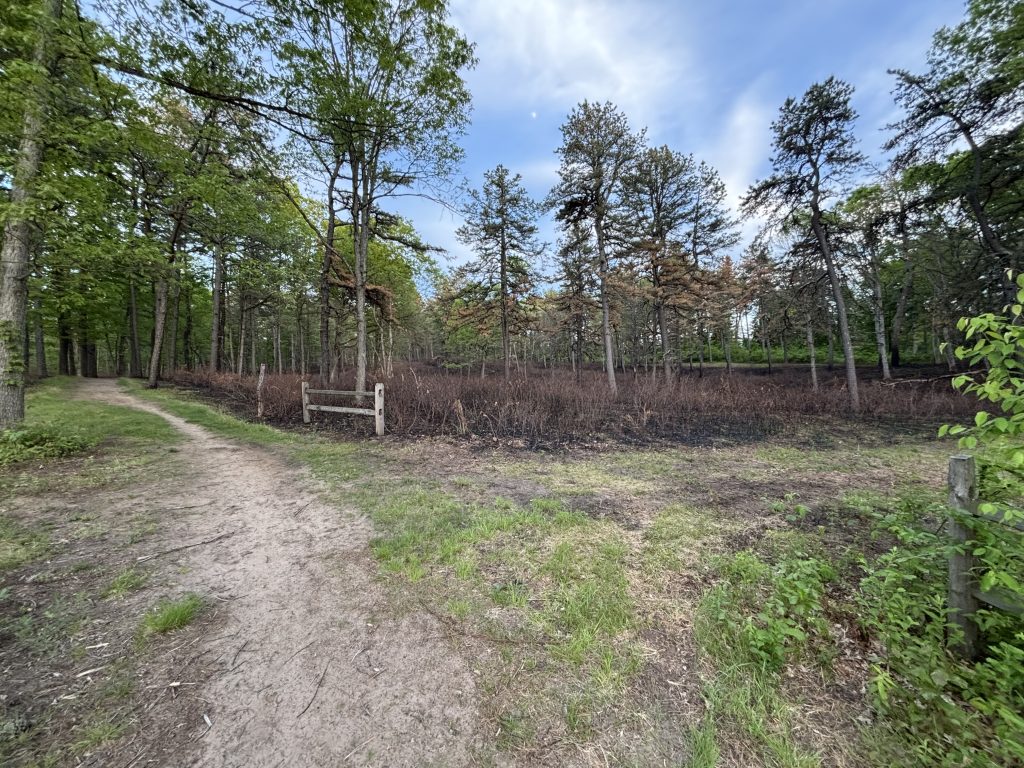
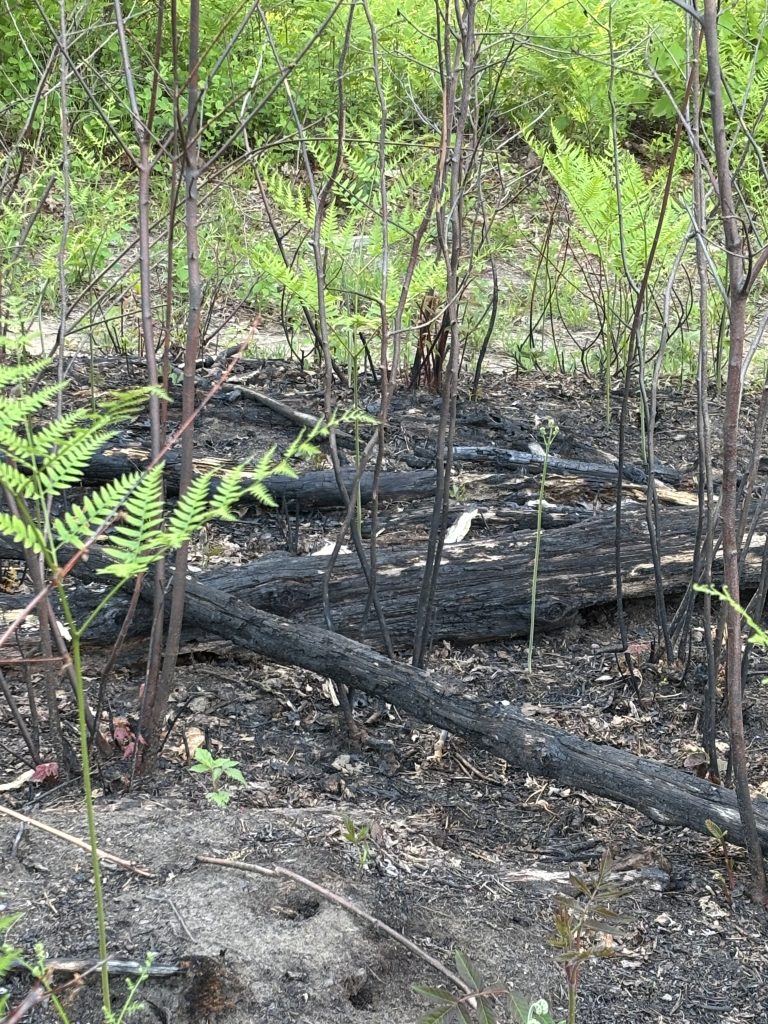
Photos of the area about 7 days after a controlled (or prescribed) burn.
Thom Hanford (June 2026)
A controlled burn, or prescribed burn, is a deliberate, carefully managed fire used to maintain the health of a natural area. Controlled burns are generally planned at times where there are ideal temperatures, moisture levels, wind conditions and other weather conditions, so that conservation professionals and ecologists can carefully prepare and monitor the site. In some cases, controlled burns happen in crisis situations to contained wildfires.
Fire is a natural ecological process, and a controlled burn allows for a managed and safe replication of the process. This helps to maintain levels of brush and growth, so an unexpected and far more dangerous and uncontrolled wildfire does not occur.
In the case of Albany’s Pine Bush Preserve and in other urban or population-adjacent parks, this is a critically important process, since it also helps to protect life and property. The controlled burn allows conservation professionals to burn away excess brush, dried leaves, fallen trees, branches, and undergrowth to eliminate fuel that would be spent in a wildfire. Without periodic controlled burns, these natural elements can over-accumulate, and lead to conditions that would promote or further fuel an accidental or naturally occurring fire. Essentially, it seeks to “starve” a fire before it starts, dramatically lowering the chance that a lightning strike, tossed off cigarette or campfire could cause a life-threatening event. In addition to reducing the likelihood of fire altogether, controlled burns help to ensure that any resulting fires have a better chance of being contained and/or quickly burning off.
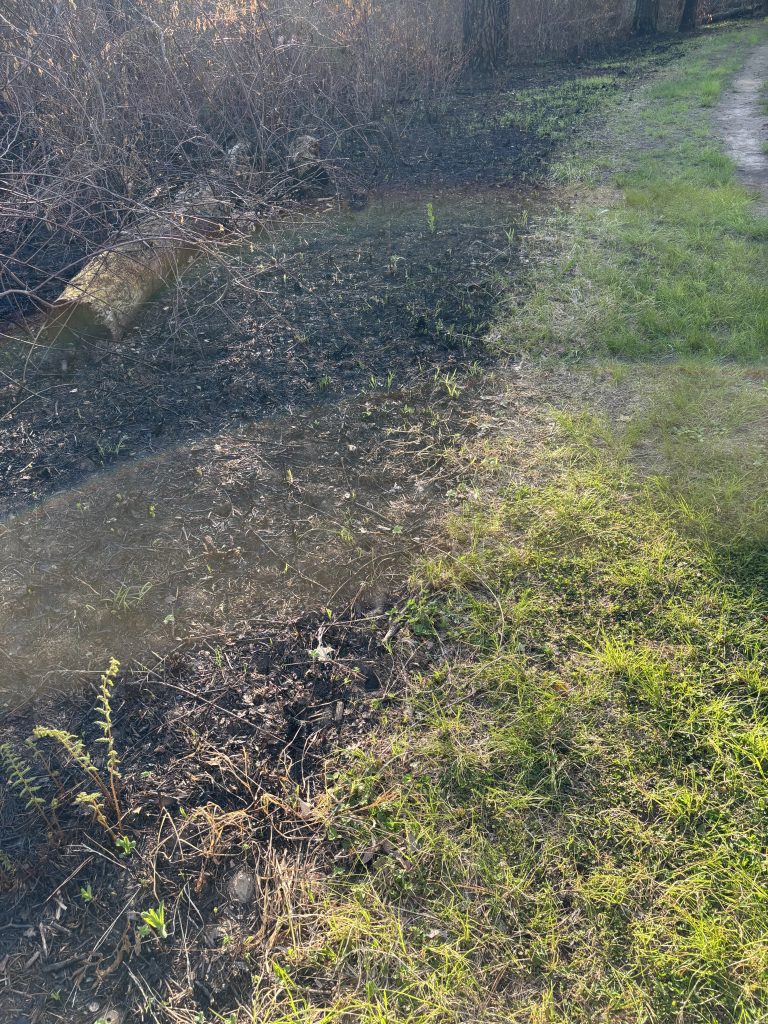
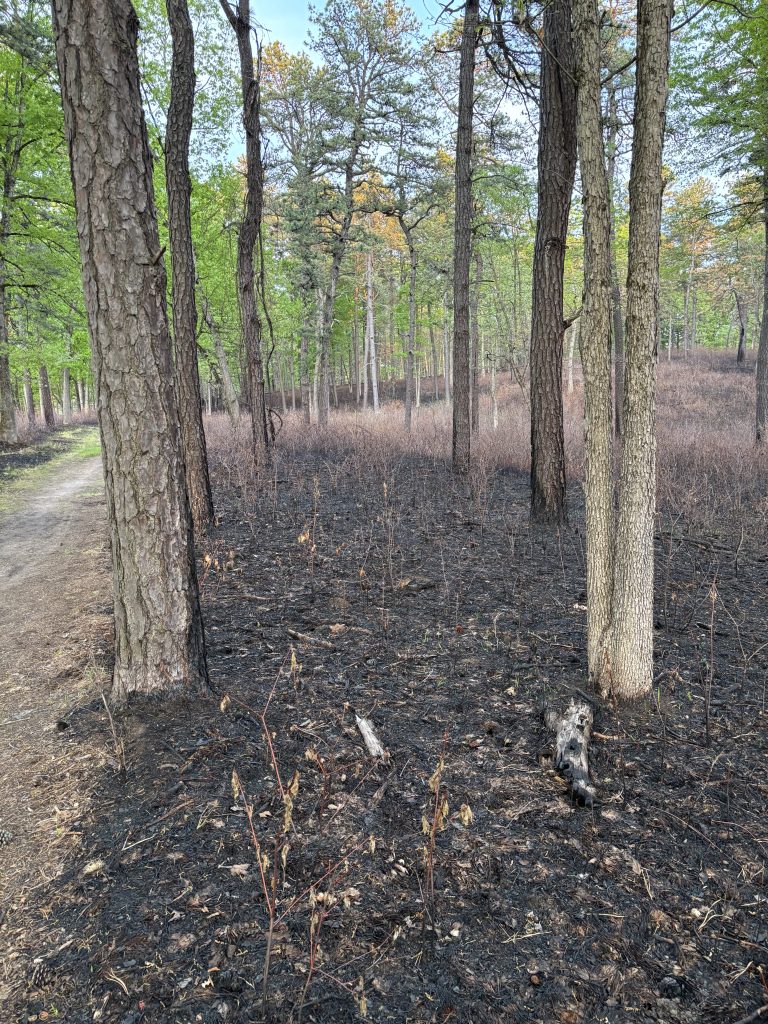
Controlled burns are carried out with surgical precision. In the photos at left, you can see how the conservation team guided the flames and held the fire to clean, straight edges. These photos how precisely the burn was contained and directed, turning what could be chaos into a restorative act.
Photos: Thom Hanford (June 2026)
In the Pine Bush, the Albany Pine Bush Preserve Commission manages the burns, and work in collaboration with the NYS Department of Environmental Conservation (DEC) and area fire departments. They have trained crew members that work very closely with local agencies to be sure the public, hikers and support personnel are fully informed about the prescribed activities to either avoid the area or be aware if support or action is needed. In Guilderland, we learn about this through road signage, news reports and the notification system managed by the town.
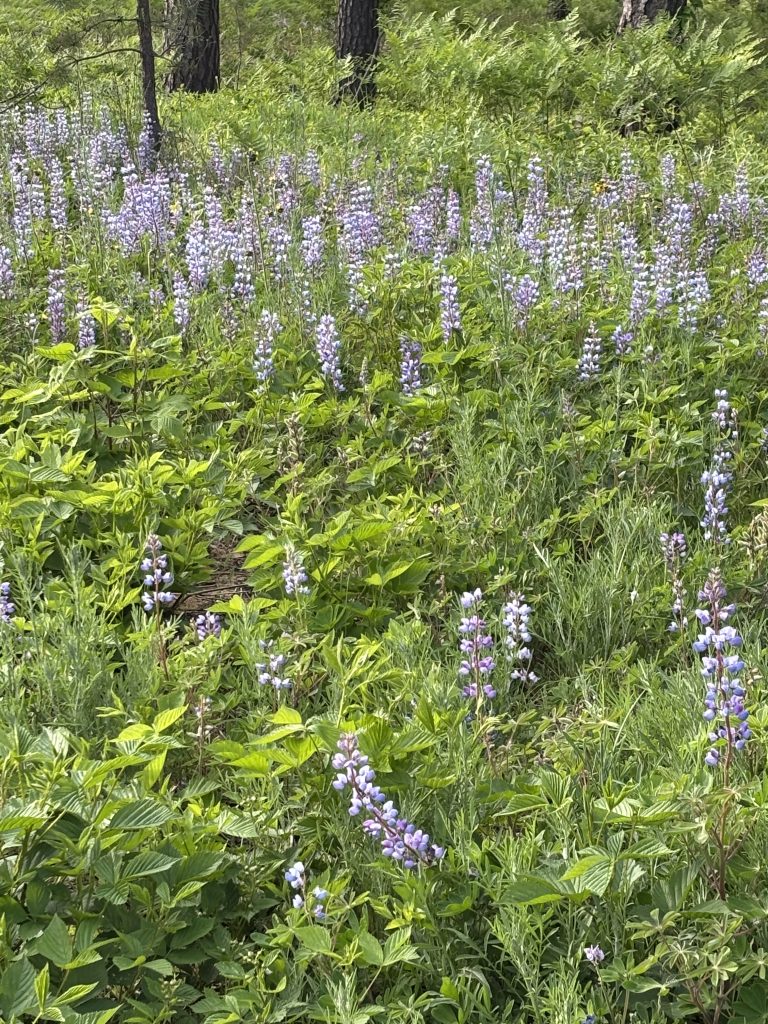
The Pine Bush is very unique due to its dependance on fire. As a rare fire adapted ecosystem, the Pine Bush actually evolved to burn regularly. Plants and native animal species rely on periodic fire, which helps maintain a delicate ecological balance. It’s critical because invasive plants and flora that crowd out native species are generally less tolerant to fire, while many native plants evolved to thrive after periodic burning. The ash left behind is not a blemish on the land. Rather, it serves to enrich soil. With less overgrowth, sunlight also reaches the ground, and newly dropped or dormant seeds are free to sprout. So, despite looking to the contrary, the controlled burns are vital to maintaining and renewing the ecosystem, and they serve to bolster biodiversity and natural resilience.
Of note, is the fact that the Pine Bush is home to a pitch pine-scrub oak environment (pine barrens). Pitch pine-scrub oak environments are globally rare arid locations, and the preservation and conservation of the Pine Bush are of critical interest not only to New York, but the entire country. There now very few pitch pine-scrub oak barrens that are as healthy and vibrant as the Pine Bush Preserve, making it a critical site for research and conservation education.
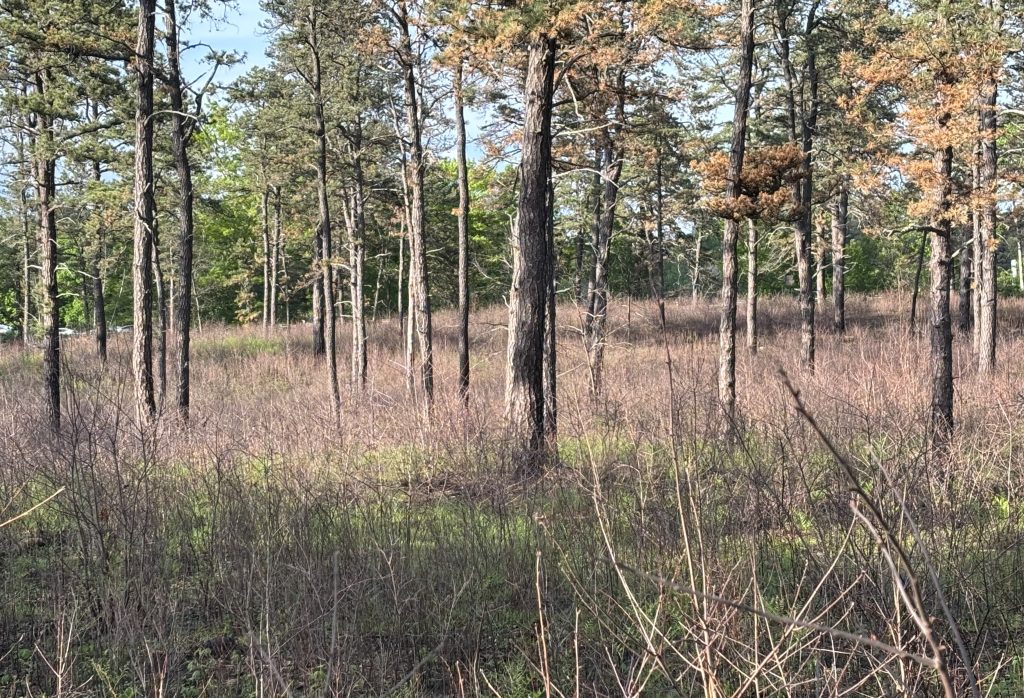
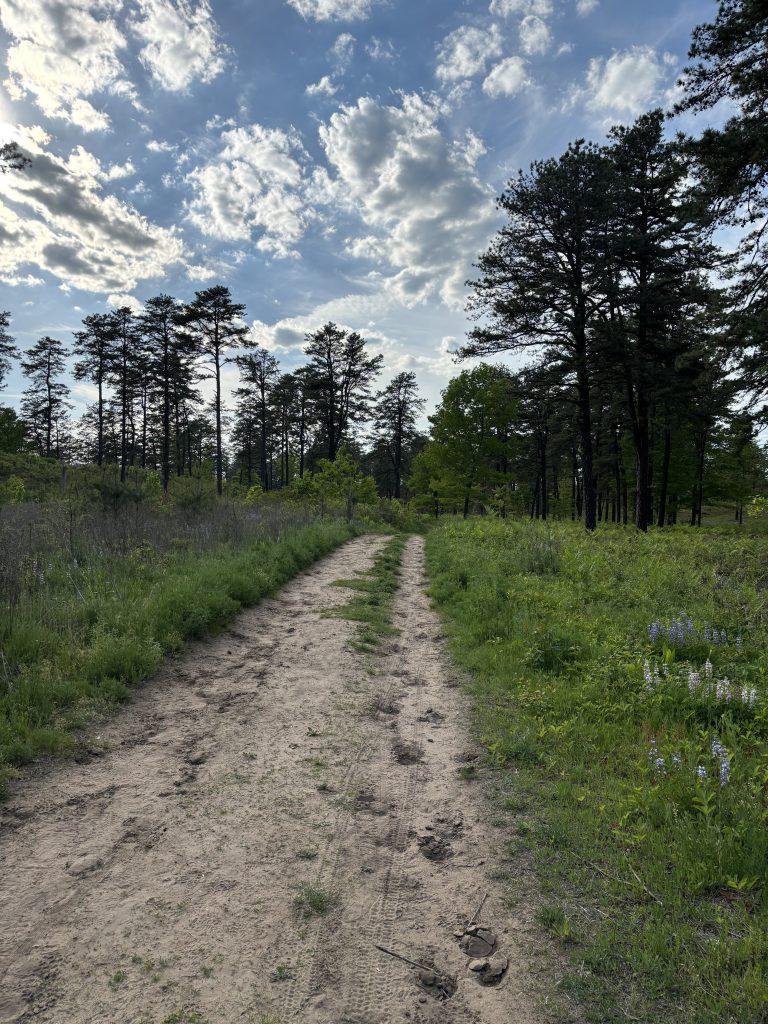
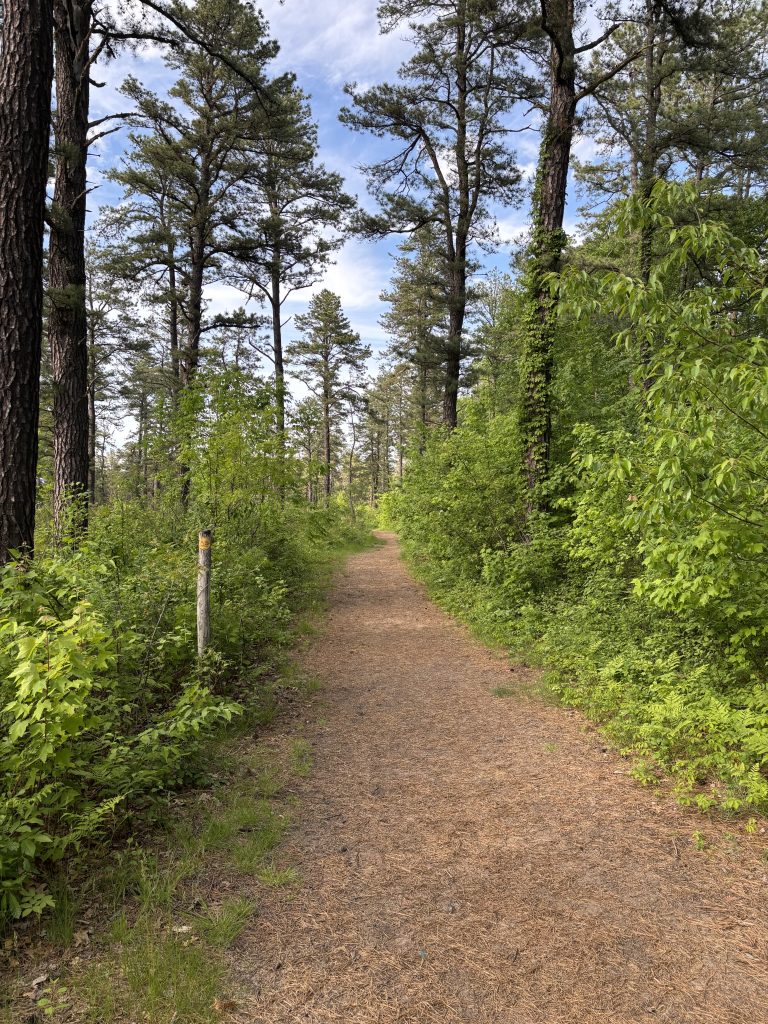
Photos showing the nature of the pitch pine-scrub environment in the Pine Bush Preserve.
Thom Hanford (May 2026)
It may sound improbable, but Albany shelters one of the rarest forest ecosystems on Earth. The Pine Bush is a living, breathing remnant of an ancient ecosystem. Every day, a devoted community of conservationists tends this fragile space with steady hands and love, protecting it, and when the land calls for it, renewing it through the transformative power of fire.