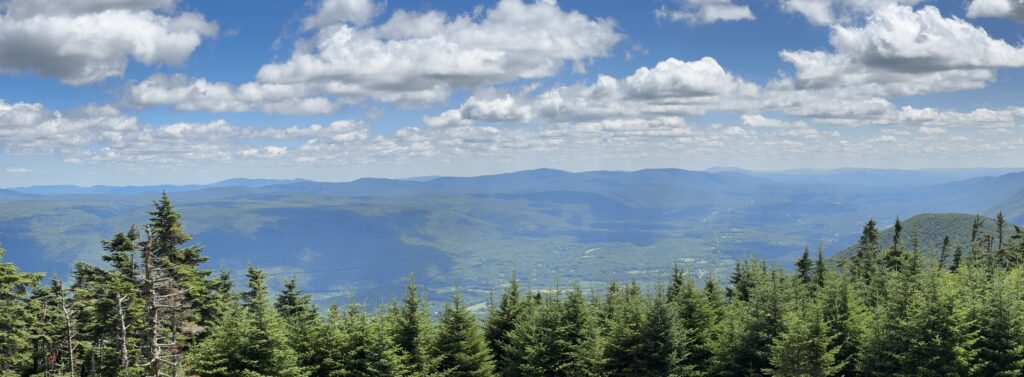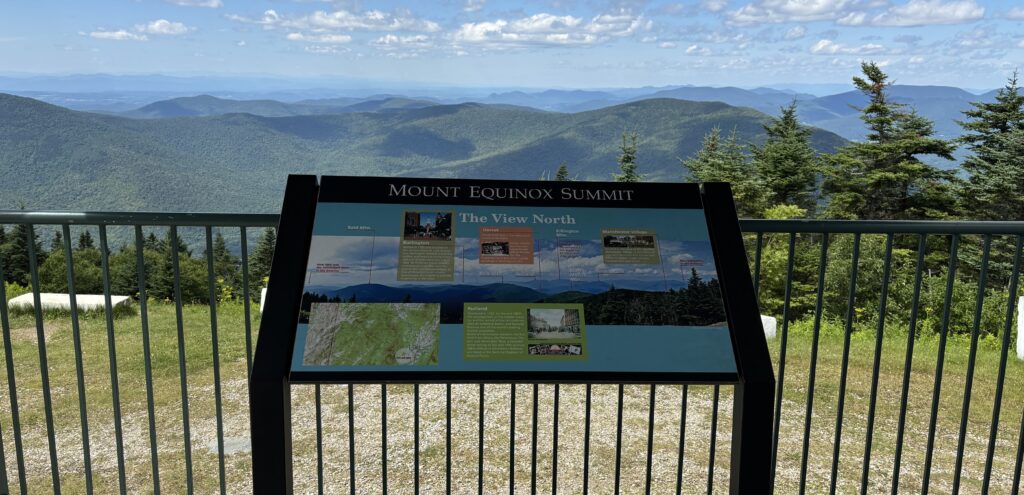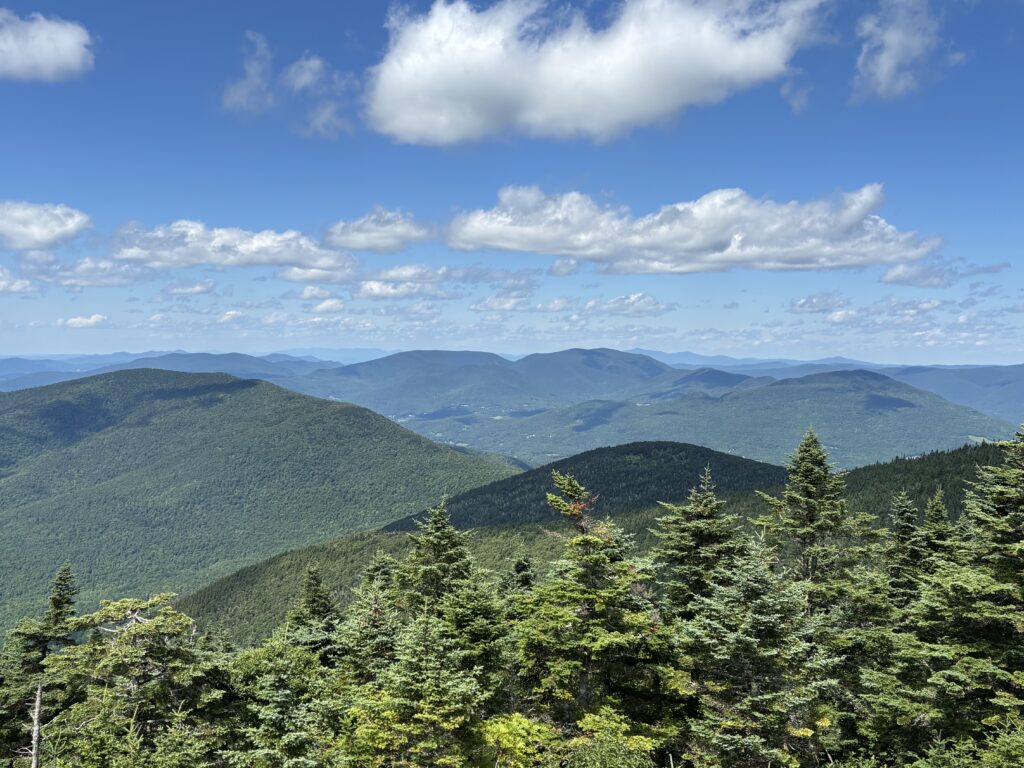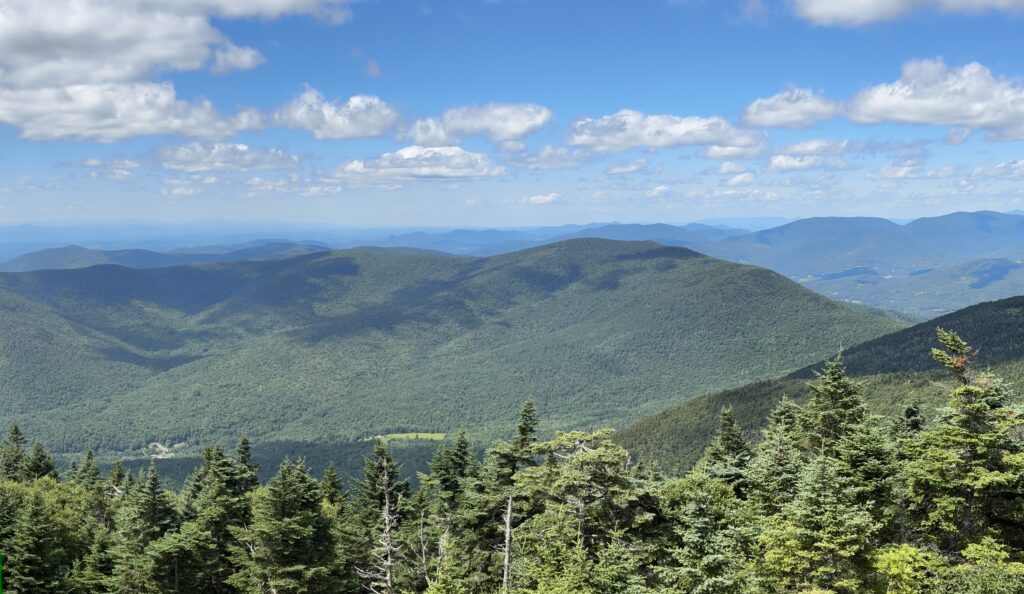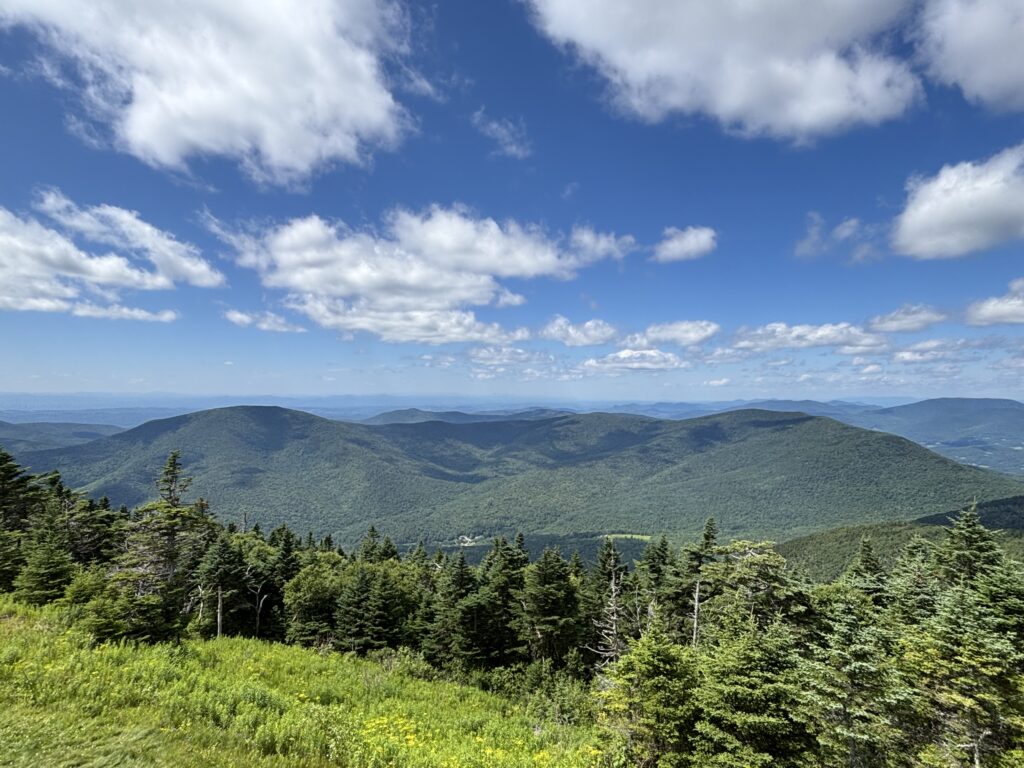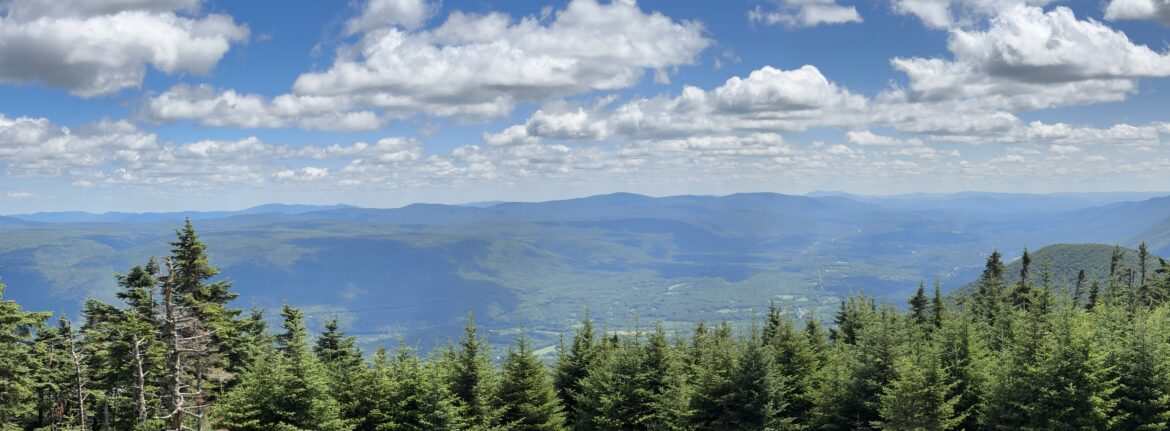
Mount Equinox has long been a landmark for people traveling through the region and the Taconic Mountain Range. Its slopes have seen early settlement, logging, and later conservation efforts that now protect much of the mountain’s forest and summit. The summit is broad, quiet, and often windy. On clear days, the view reaches across the Green Mountains to the east, the Taconics and Berkshires to the south, and the distant Adirondacks to the west. It is one of the few places in Vermont where you can see multiple states and major mountain ranges from a single vantage point. The openness of the summit creates a calm, expansive feel that contrasts with the dense forests below.
Ice carved out the deep valleys at the mountain’s base, leaving behind a mix of hardwood forests that shift to spruce and fir trees as the elevation increases. This creates clear ecological zones, with maple, beech, and birch on the lower slopes and cooler, moss‑rich spruce‑fir communities near the top. Whentraveling to the top, these become readily apparent. Wildlife moves easily through these habitats, and the mountain features species like black bear, moose, bobcat, and migrating birds.
Mount Equinox rises above southern Vermont as the tallest peak in the Taconic Range, a steady presence that defines the landscape around Manchester, Vermont.
The Mountain’s Human Story
In early 18th and 19th century Vermont, settlers cleared its lower slopes for farming. In fact, stone walls still mark where fields and pastures once were. As agriculture declined and consolidated in the 20th century, a great deal of the land slowly returned to forest. In the mid‑20th century, Dr. Joseph George Davidson, who was a chemist and Union Carbide executive, purchased large sections of the mountain. He oversaw construction of a Skyline Drive toll road to the summit between 1941 and 1947, and also built reservoirs, lodges, and hydroelectric generators. His work made Mount Equinox one of the few privately owned peaks in Vermont with a road to the top that was accessible and electrified.
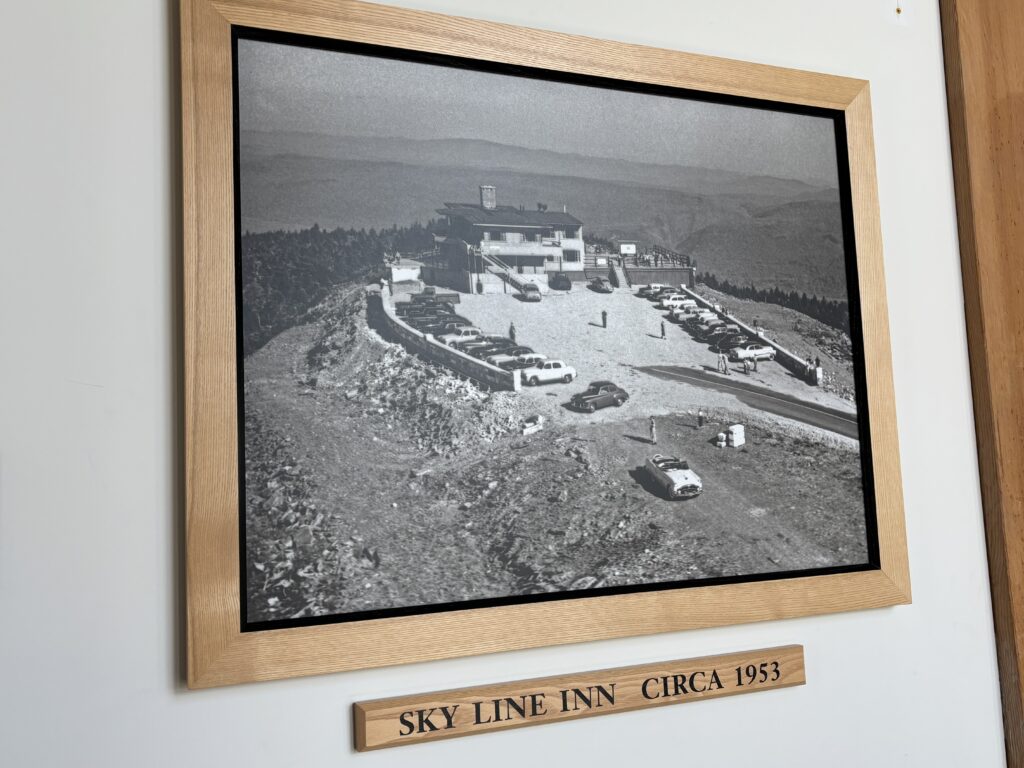
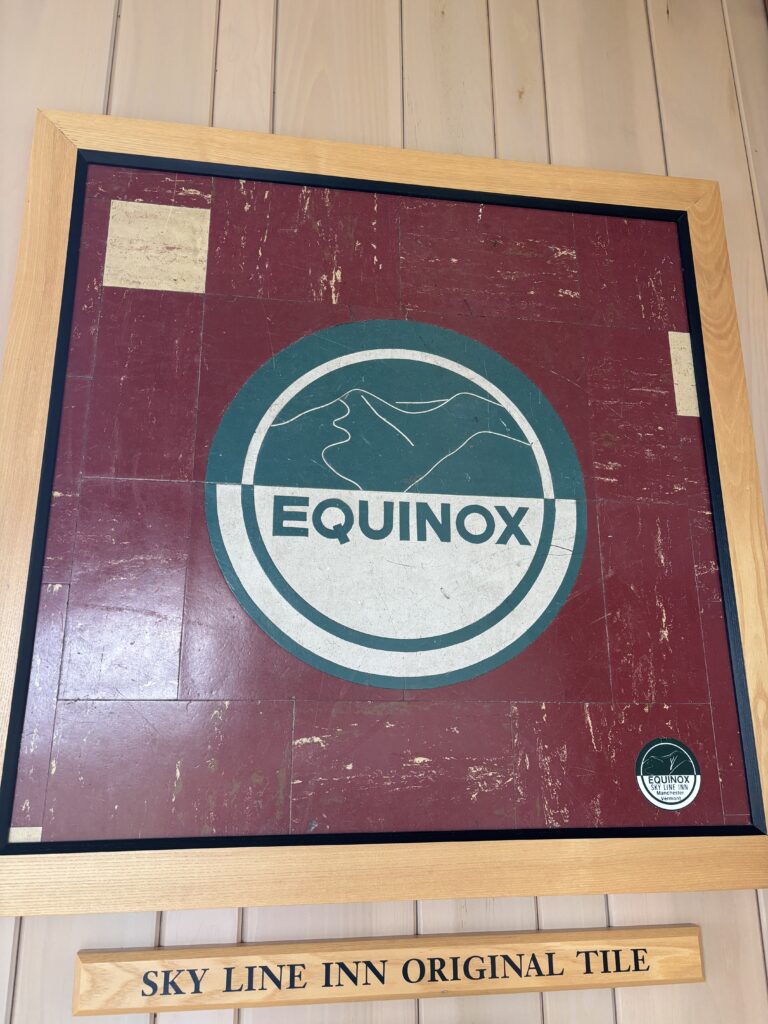
The Equinox Lodge was one of Davidson’s most visible projects. Built near the summit, it served as a destination for visitors traveling up Skyline Drive. Over the years, the lodge fell into decline as maintenance costs grew and visitor numbers waned. Eventually, it was closed.
By the late 1960s, Davidson transferred nearly 7,000 acres to the Carthusian Order, a Catholic monastic community known for its silent and cloistered lifestyle. In 1970, the Carthusians built the Charterhouse of the Transfiguration, which is still present to day. The monastery itself is closed to visitors, however the Order continues to care for the mountain’s land, operates the toll road to the peak (Skyline Drive), and protects and manage the mountain’s forests.
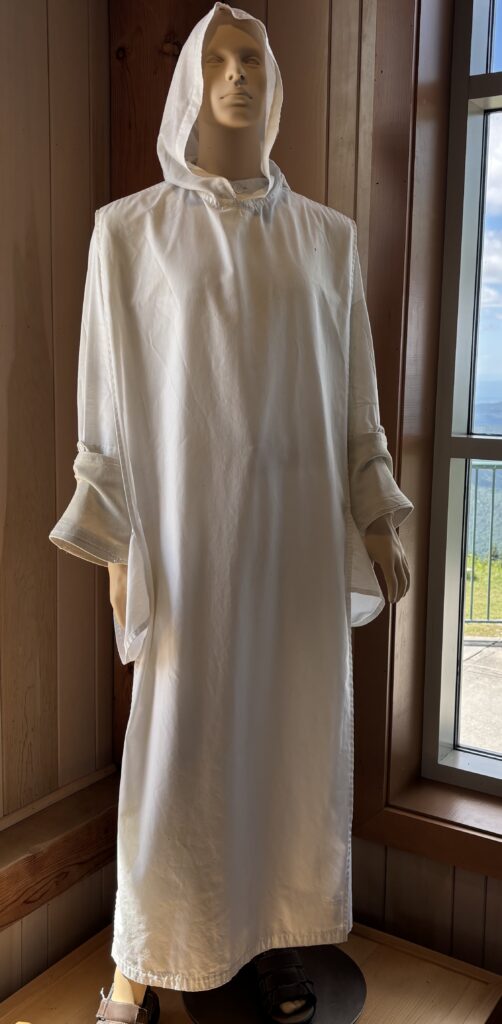
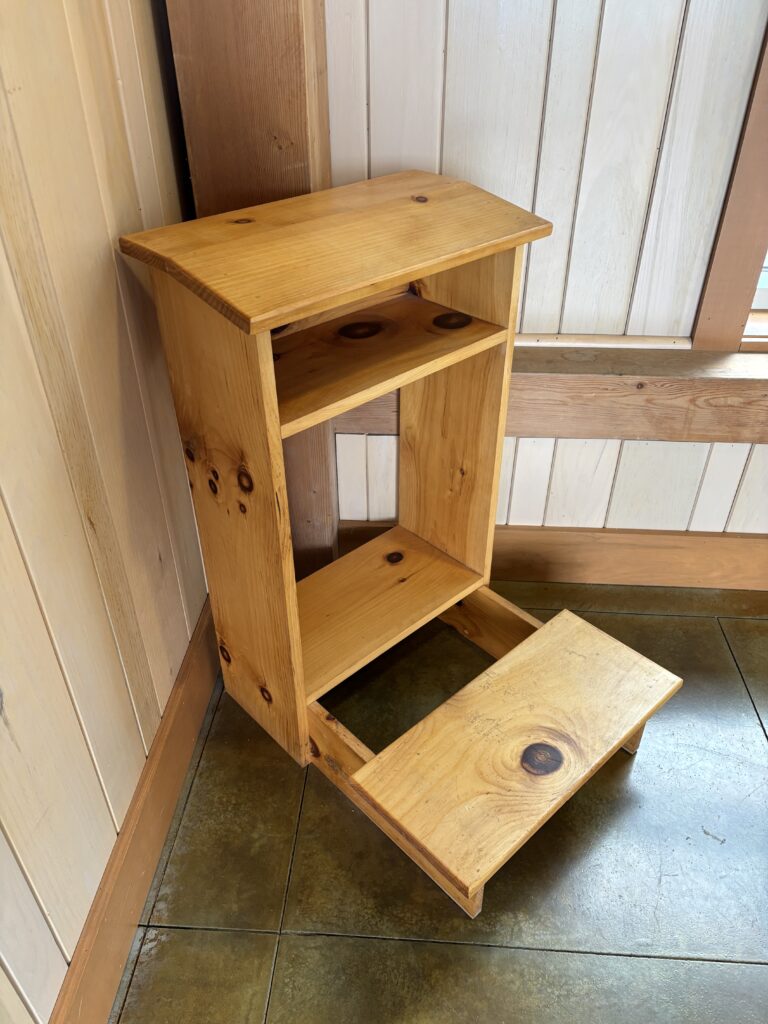
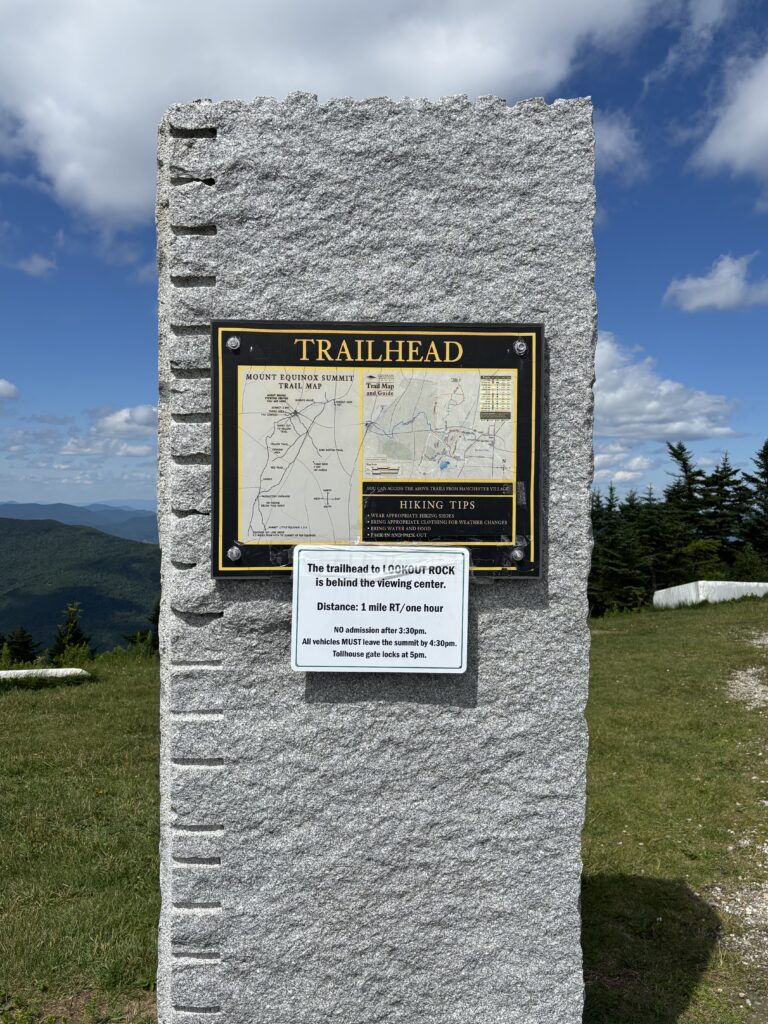
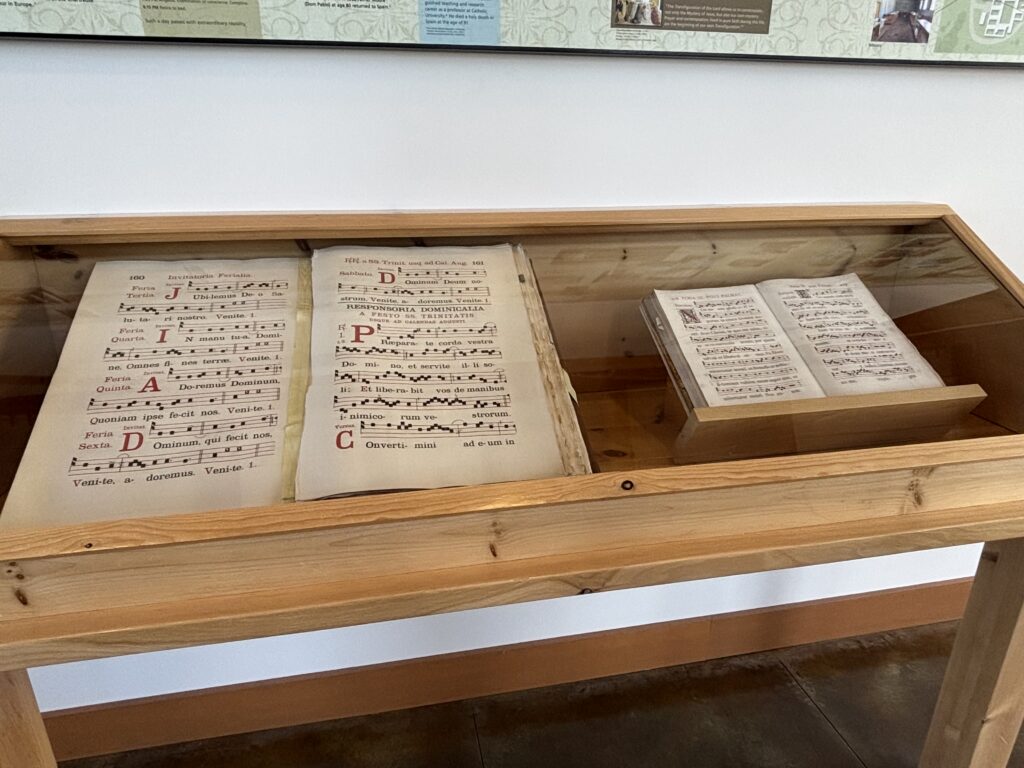
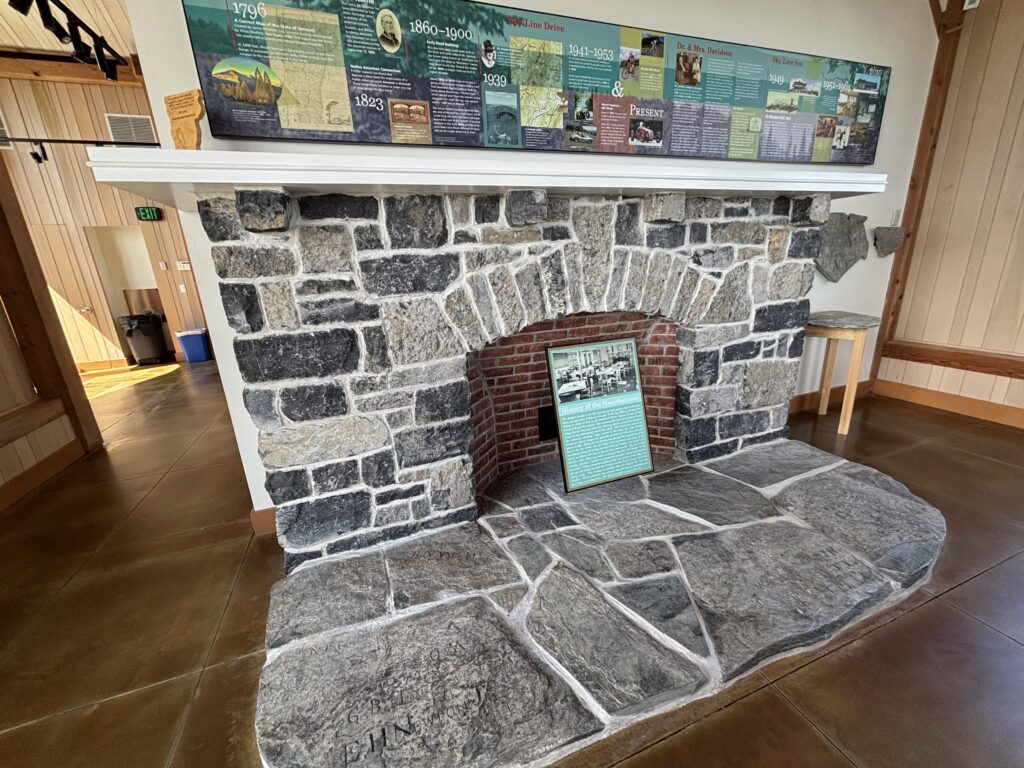
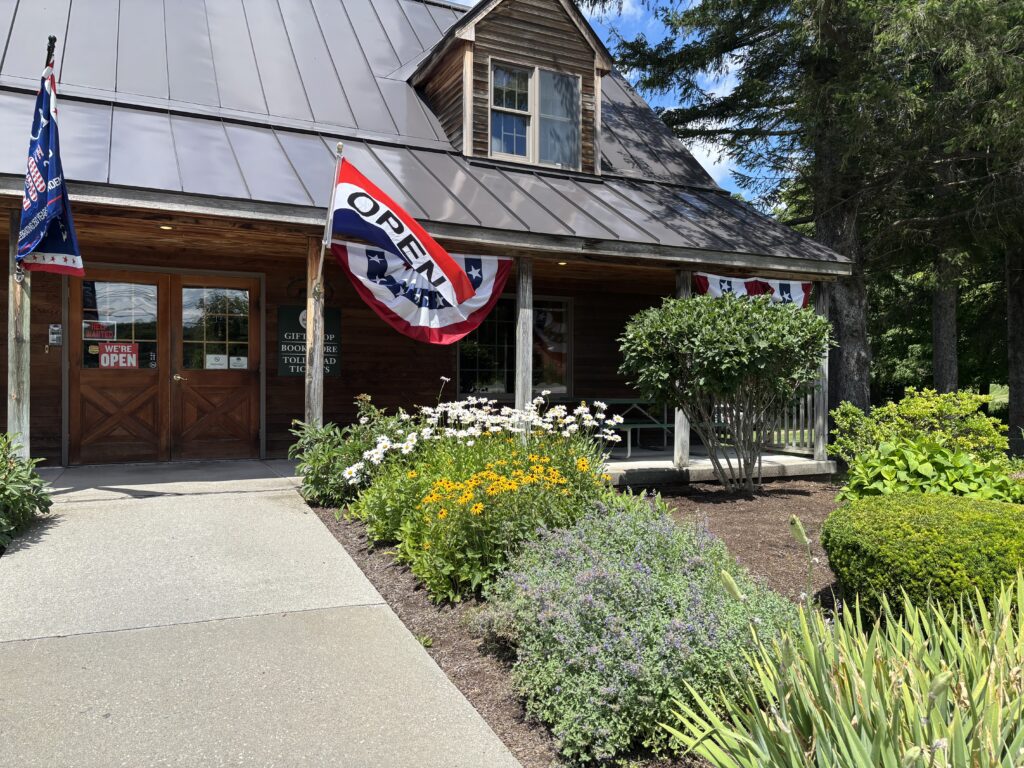
Today, the summit and Skyline Drive features the St. Bruno Viewing and Visitor Center that continues the tradition of Skyline Lodge by offering rest, warmth and stunning views. It also focuses on the history of the Carthusian Order, with interpretative signage and exhibits throughout the building. The building features several decks that offer even greater opportunities to see the landscape.

Views and Landscape
At the base of Mount Equinox, the view is close to the valley floor. You see farmland, rooftops, and the surrounding ridges of Manchester and Arlington. The mountain rises steadily behind them, covered in forest.
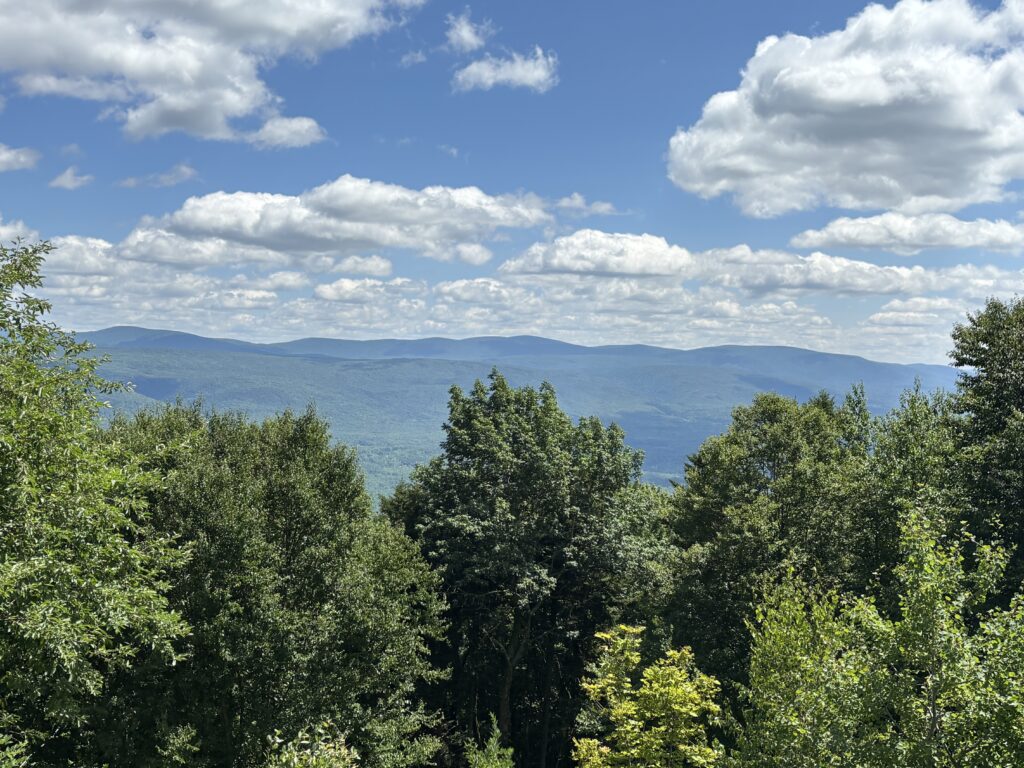
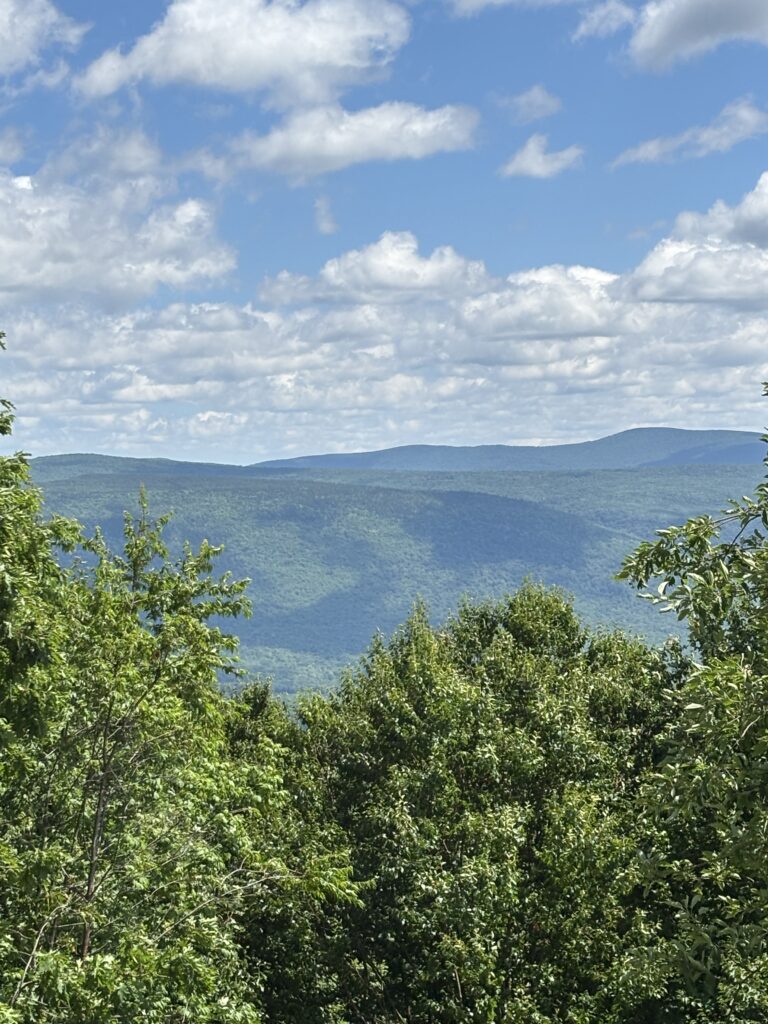
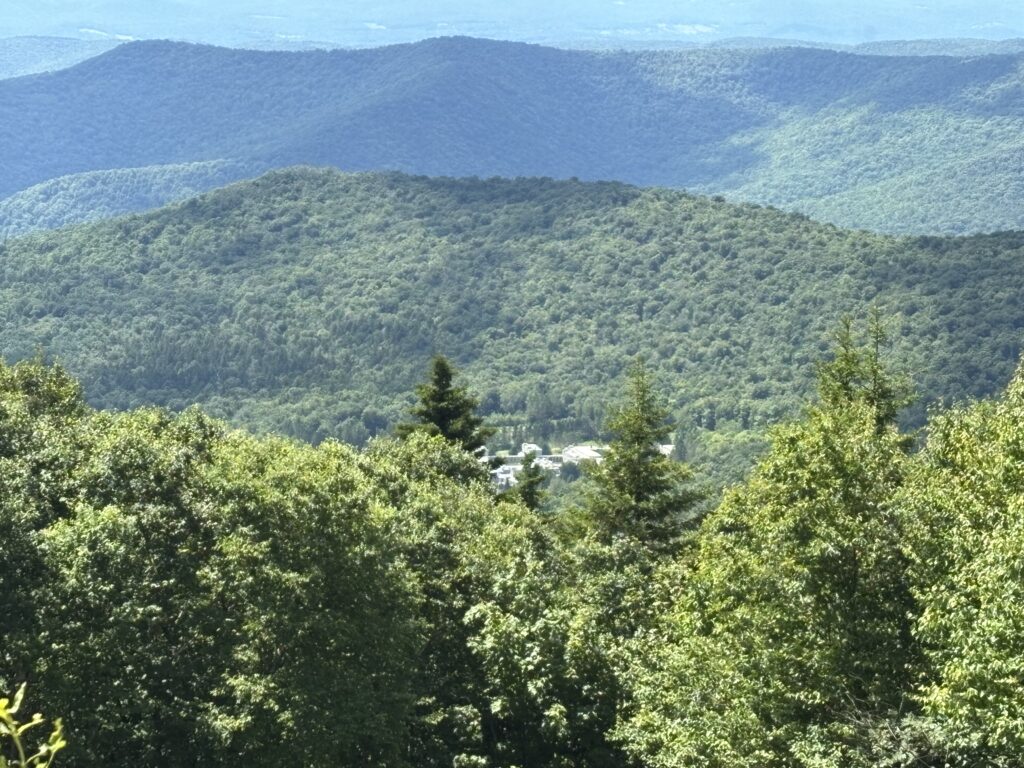
Midway up, the perspective widens. The Green Mountains to the east become visible, and the valleys below look smaller. This stage of the climb shows both the local landscape and the broader ridges of Vermont. You can also see the Charterhouse of the Transfiguration. It sits on the western slope, tucked into the forest but visible. As you ascend, the monastery’s granite walls and roofline appear through breaks in the trees, especially near the mid‑section of the road.
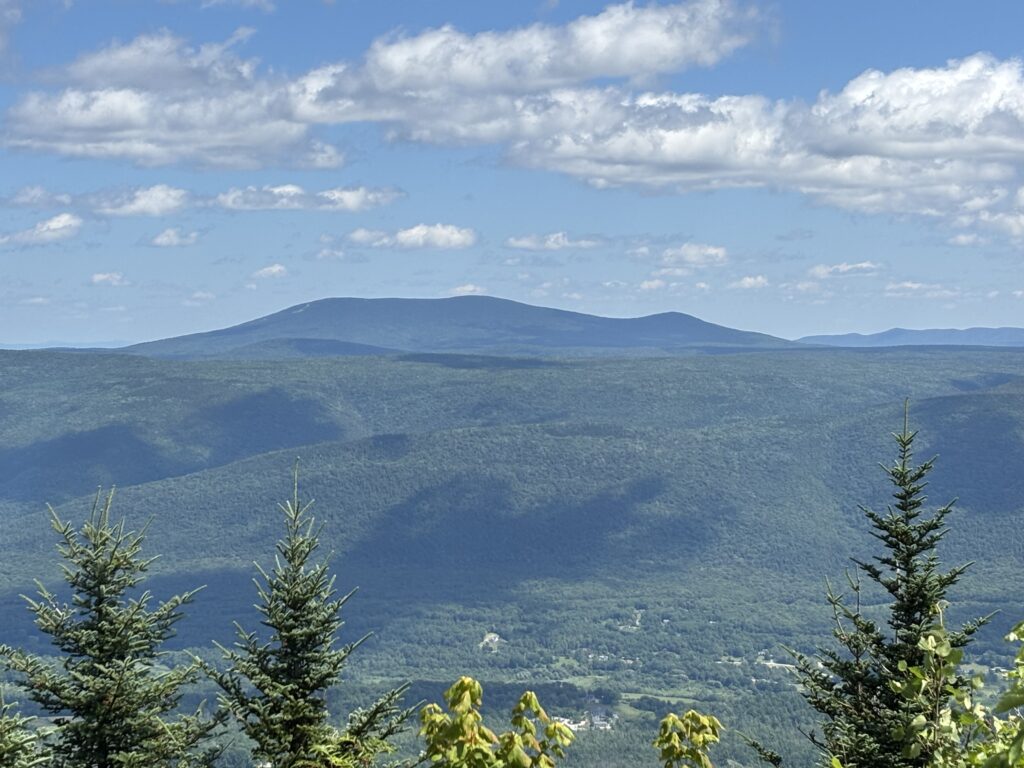
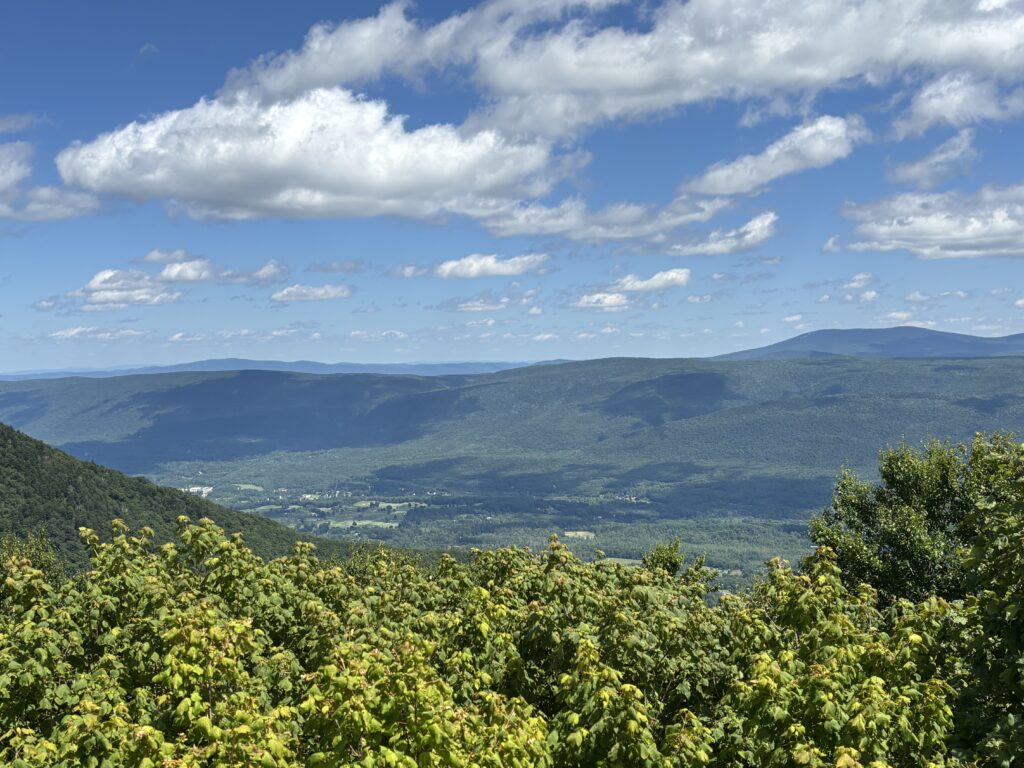
Higher on the road or trail, the horizon expands southward. The Berkshires and Taconics come into view, adding depth to the scene. The mountain’s position at Vermont’s edge makes the southern outlook especially open.
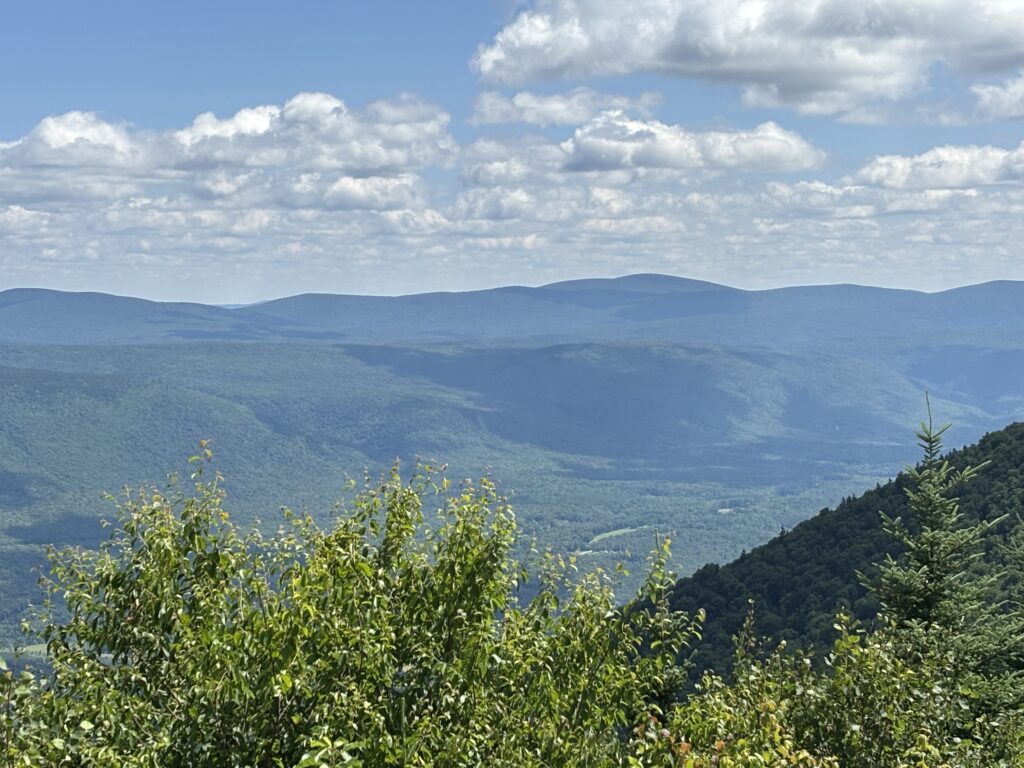
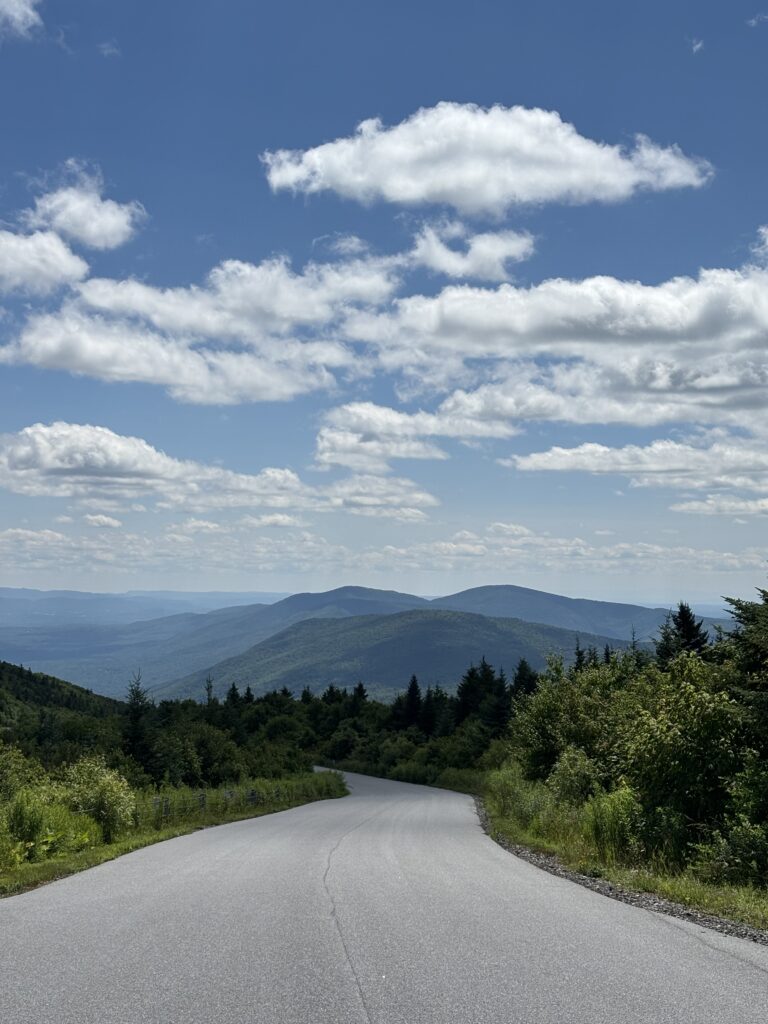
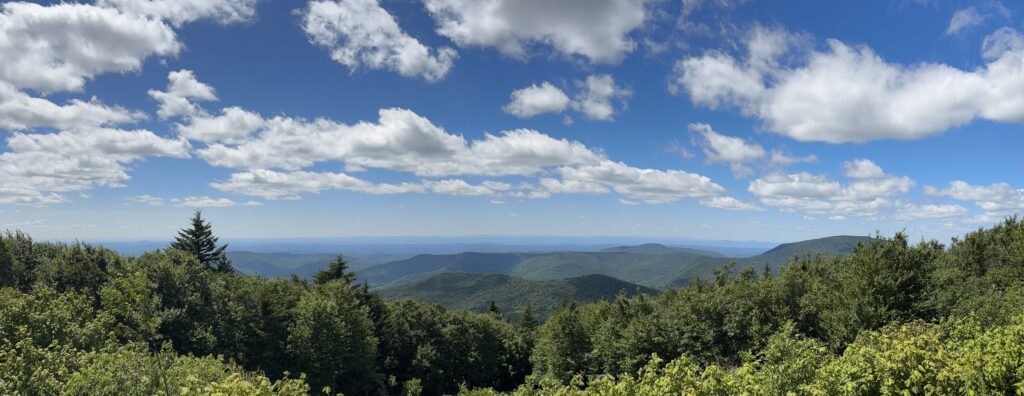
At the summit, the panorama is complete. To the west, the Adirondacks rise beyond Lake Champlain. To the east, the Green Mountains stretch in long chains. From here, you can see across three states and two major ranges, making it one of Vermont’s widest outlooks.